



Call Us 24/7



The Serengeti National Park is the flagship of Tanzania's Northern Safari Circuit and one of Africa's most celebrated wildlife destinations. Covering approximately 1.476 million hectares, the park forms the central protected area of the much larger Serengeti–Mara ecosystem. Its name comes from the Maasai word “Siringet,” meaning “the place where the land runs on forever”—a fitting description of its immense grasslands and open horizons.
The Serengeti is internationally renowned for the Great Wildebeest Migration, one of the world's most remarkable natural spectacles. UNESCO recognizes the park for its exceptional biodiversity and the large-scale annual movement of wildebeest, zebras and gazelles across the ecosystem. Serengeti National Park was inscribed as a UNESCO World Heritage Site in 1981 under natural criteria (vii) and (x).
The Great Wildebeest Migration
One of Nature's Greatest Journeys
The Great Migration is not a single event that happens on one particular date. It is a continuous, seasonal movement of huge herds responding primarily to rainfall, fresh grass and water availability.
UNESCO describes the Serengeti migration as involving around two million wildebeest, together with hundreds of thousands of zebras and gazelles, moving through an approximately 1,000-kilometre annual circuit across Tanzania and Kenya. The exact location of the herds changes from year to year depending on rainfall and grazing conditions.
Typical seasonal pattern
January–March – Southern Serengeti & Ndutu
The herds are commonly concentrated around the short-grass plains of the southern Serengeti and adjoining Ngorongoro ecosystem. This period is associated with the calving season, when large numbers of wildebeest give birth.
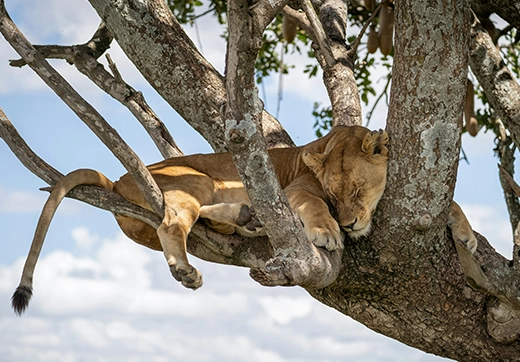
Predators such as lions, cheetahs, hyenas and other carnivores take advantage of the abundance of young animals.
April–May – Central & Western Serengeti
As the southern plains become drier, the herds gradually move toward areas offering fresh grazing and water. The landscape becomes increasingly green during the rainy period.
June–July – Western Corridor & Northern Movement
The herds continue moving northward, passing through the Western Corridor and toward the northern Serengeti. River crossings may occur during this broader migration period, although timing varies considerably from year to year.
August–October – Northern Serengeti & Mara Ecosystem
Large concentrations can occur in the northern Serengeti, with some herds crossing the Mara River between Tanzania and Kenya.
River crossings are spectacular but cannot be guaranteed on a particular day or at a particular location.
November–December – Return South
With the short rains, the migration begins moving southward again toward the southern plains, restarting the annual cycle.




Gallery
Discover some of our finest Safaris captured through visuals




Featured Destinations
Testimonials


California, USA

Everything about this Serengeti safari was truly magical! The wildlife, breathtaking landscapes, and endless golden plains were incredible. Our guide was exceptionally professional and knowledgeable, and witnessing lions, elephants, and other wildlife in their natural habitat was an unforgettable experience. The Serengeti sunset was simply breathtaking!

Milan, Italy
We celebrated our honeymoon with Buffalo Weaver Safaris, and it was one of the best decisions we made! From the romantic safari experiences and beautiful scenery to the personalized service and carefully planned itinerary, every moment felt special. The privacy, attention to detail, and unforgettable wildlife encounters made our honeymoon truly magical. A perfect 10/10 experience!

Dubai, UAE
From booking to boarding, everything was smooth. The team Lead guide, Victor us perfectly and the onboard activities kept our kids entertained while we relaxed. Highly recommend!”

Sydney, Australia
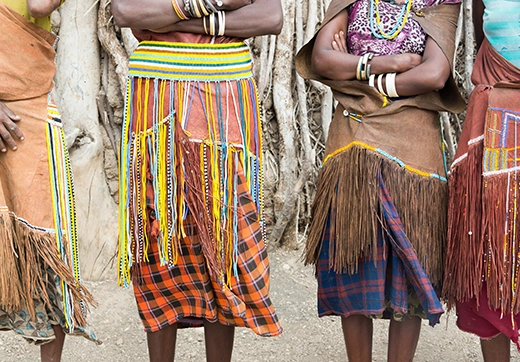
I’ve traveled to many places, but nothing compares to this cultural safari. Meeting the Hadzabe and Sonjo communities, learning about their traditions, way of life, and rich heritage was a truly unforgettable experience. The warm welcome and authentic cultural encounters made us feel connected to Tanzania in a way we never expected. It felt like discovering a completely different side of Africa.
Experience unforgettable wildlife encounters, breathtaking landscapes, and authentic cultural adventures with Buffalo Weaver Safaris.
We take care of every detail you can travel with confidence ease.

Copyright © All Rights Reserved, Design by Morani Creativity


